James Cagney in “Yankee Doodle Dandy,” the perfect movie for the Fourth of July.

James Cagney in “Yankee Doodle Dandy,” the perfect movie for the Fourth of July.


Last week, I wrote about the novel Shaft. This week, a few words about “Shaft,” the 1971 movie.
The story is fairly simple, private investigator John Shaft is hired by a Harlem gangster to rescue the man’s teenage daughter from Mafia kidnappers.Some of the social and political complexities of the novel are lost, but the action is retained. The movie is nearly wall-to-wall action, with a few lulls while Shaft verbally spars with police Lt. Androzzi, and beds several women.
The movie had some excellent things going for it. It was based on a solid novel by Ernest Tidyman, who co-wrote the screenplay. It had a good cast with Richard Roundtree as Shaft, Charles Cioffi as Lt. Androzzi, and Moses Gunn as the gangster. Gunn has a terrific moment early on when hiring Shaft and trying to maintain his tough front, while his emotions overwhelm him and tears come to his eyes.
“Shaft also had long-time magazine photographer, writer, and filmmaker Gordon Parks as director. In an interview, Richard Rountree said Parks was so cool, he was Shaft.
And, perhaps most memorable of all, “Shaft” had a musical score and song by Isaac Hayes. Hayes won an Oscar for “Theme from Shaft.”
Say “Shaft” to people who have seen the movie, and I will bet two things happen, they hear the song in their heads and they picture Richard Roundtree walking through Times Square in that long leather coat.
I was going to say more about the movie, but I found the following clip which says it all.
 |
| First edition |
 |
| Paperback |


EB: Congratulations on the new book. Would you tell us about it and what the police in your fictional Pennsylvania town are facing?
DK: Leaving the Scene has two meanings in this book. Long-time Penns River police chief Stush Napierkowski has retired, so changes are afoot in the department. The new chief has to hit the ground running when a hit-and-run driver kills a woman. While the homicide takes up more of the story than anything else, mostly the book deals with the conflicting demands on the cops’ time, some humorous, others not.
EB: You’ve lived with your recurring characters for a while now. Does that make the writing easier? Or is coming up with a new story always a challenge?
DK: For me it’s easier; others’ mileage may vary. I like having a set cast I can draw from, as I know many of their strengths and weaknesses already. I’ll often get an idea for a story, or a side anecdote, and my first thought will be, “Sisler needs to answer this call,” or, “this can show the differing styles and personalities of Trettle and Burrows.” It opens things up for me. I also don’t have to use every continuing character in every book. It’s a little like the old Mission Impossible TV show, where Peter Graves would shuffle through the photos of his team to choose who he wanted to use this week. As for ideas, Penns River is based on a real place. I just have to read the paper for ideas.
EB: During the writing of any of your Penns River novels, or your Nick Forte P.I. series, have you ever painted yourself into a corner and had to figure a way out of it?
DK: Oh, yeah. Two times come to mind. In each I had to throw away tens of thousands of words and go back to a place where things were still on the rails and work from there. I once wrote over 30,000 words of a Nick Forte story, fighting it all the way, when I realized this wasn’t a Forte story; it belonged in Penns River. I threw away everything but one sentence and started over. (It wasn’t the opening sentence, either.) Not coincidentally, these are the only books I tried to write without outlines. Never again. The outline often changes as the book progresses, but I always have some kind of map working. Scrivener is great for that, especially if you need to re-arrange the order of chapters.
EB: Thanks, Dana.
For more information about Dana King’s novels, check out his website, and keep up with him on Facebook or his blog.


A 49-year-old cop movie that holds up pretty well is “The New Centurions,” based on Joseph Wambaugh’s first novel.

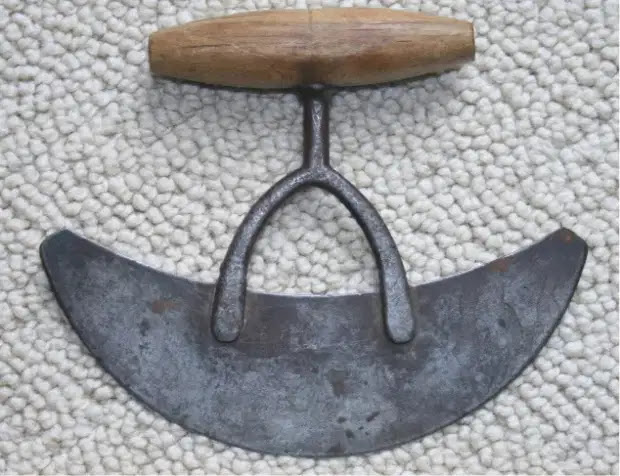
A couple of postscripts here: I had to Google “hash knife” to find out what it was. It was a cowboy’s multipurpose cooking tool.
The copyright page in the book I read had a 1936 date, but I believe this story was originally published in 1920. In the novel, Arizona is referred to as a state, so the setting, while still feeling like the old West, must have been sometime after 1912, when the territory became a state.